
THC levels in infused flower vary because you’re combining two different products — cannabis flower and concentrated extracts — each with its own potency.
Infused cannabis flower often shows some of the highest THC percentages on dispensary menus. Many infused pre-rolls and infused joints advertise potency levels that appear far stronger than traditional flower.
Those numbers can be confusing.
Two infused products with similar THC labels may deliver noticeably different experiences. One may feel balanced and consistent from start to finish. Another may feel uneven, with stronger pulls early or late in the session.
This happens because infused flower combines two different cannabis products: ground flower and a concentrate infusion. Each ingredient has its own cannabinoid profile, potency level, and distribution inside the final product.
Several additional factors also influence the THC percentage listed on the label:
- the ratio of concentrate to flower
- how evenly cannabinoids are distributed
- how the product was manufactured
- The portion of the batch sampled and tested in a laboratory
These factors partially explain why THC levels in infused flower can vary — and why a single number doesn’t always match the real experience.
The THC percentage comes from two ingredients
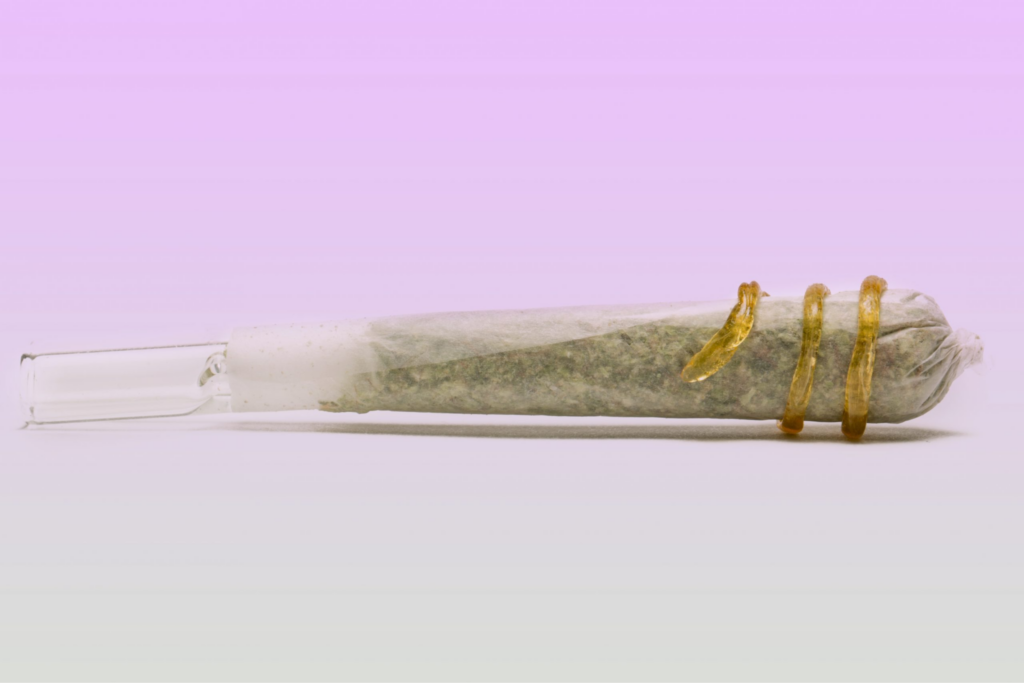
The THC number listed on an infused flower label does not come from one ingredient source. It comes from the combination of cannabis flower and added concentrate.
Each ingredient contributes cannabinoids to the final product.
Because both ingredients vary in potency, the final THC percentage can change significantly from batch to batch.
Flower establishes the potency baseline
Ground cannabis flower provides the base material for most infused products. Flower potency varies naturally depending on several factors:
- the strain or cultivar
- growing conditions
- harvest timing
- curing and storage practices
Most cannabis flower sold today tests somewhere between 15% and 30% THC.
When that flower becomes the base of an infused joint or infused pre-roll, it establishes the starting point for the product’s cannabinoid content.
Even before infusion happens, two batches of flower can differ noticeably in potency.
Concentrates add a potency boost
Concentrates usually contain far higher THC levels than flower. Many concentrates test between 60% and 90% THC, depending on the extraction method and product type.
When a concentrate is added to ground flower, it significantly raises the overall cannabinoid content of the final product. Small changes in ratio can shift potency dramatically, even between products that look nearly identical.
This is one of the main reasons infused products often show very different potency levels from one brand to another.
Infusion ratios change the final THC percentage
The ratio of concentrate to flower has a major impact on the potency printed on the label.
For example:
- A lightly infused product may contain mostly flower with a small amount of concentrate.
- A heavily infused product may include a much larger concentrate portion.
Both products may be labeled as infused flower, but the THC levels can differ substantially.
This difference in infusion ratio explains why some infused pre-rolls test around 30–40% THC, while others may reach 50% or higher.
How infusion methods affect potency distribution
The way a product is infused also affects how cannabinoids are distributed inside the flower.
Even if a product tests high in THC percentage, the cannabinoids may not be spread evenly throughout the entire joint or pre-roll.
Manufacturing methods play a major role in this distribution.
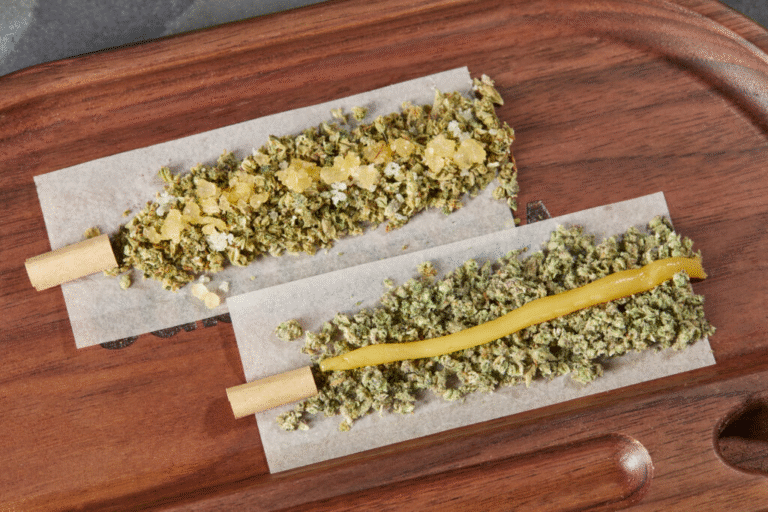
Blended infusion
One common method is to blend concentrates directly into ground flower.
During this process, manufacturers mix the concentrate with flower before rolling the joint or filling the pre-roll.
The goal is to distribute cannabinoids evenly throughout the material.
However, concentrates are sticky and dense compared to flower. This can make perfectly even distribution difficult, especially in large batches.
Coated infusion
Another common method coats the outside of the joint with concentrate and sometimes rolls it in kief.
This style is often associated with infused pre-rolls, sometimes marketed as “moon rocks” or high-potency joints. In this design, cannabinoids concentrate near the exterior layer of the product rather than inside the flower itself.
This can produce stronger early draws if the coating burns quickly, while later draws may rely more on the underlying flower.
Why uneven potency can occur
Because concentrate and flower have very different textures, cannabinoids do not always distribute perfectly evenly.
Small variations during mixing or coating can create areas with higher or lower cannabinoid density.
Consumers sometimes describe this as:
- hot spots with stronger reported effects
- weaker sections of the joint
- uneven intensity during the session
Even when the product tests within regulatory standards, these small differences can influence the overall experience.
How lab testing influences THC numbers
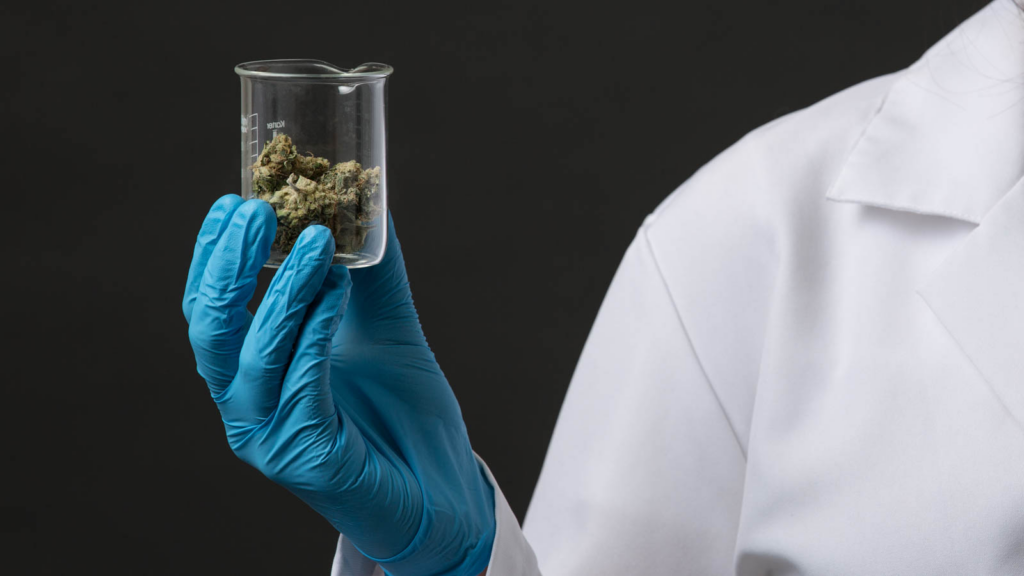
Another important factor behind THC variation is how cannabis products are tested.
Every legal cannabis product must be analyzed by a licensed laboratory before it reaches store shelves. The lab measures cannabinoid levels and produces a certificate of analysis, often called a COA.
The THC number printed on the label comes from this testing process.
Labs test samples, not the entire batch
Laboratories cannot test every gram of a product. Instead, they collect a small sample from a larger batch. That sample is analyzed for cannabinoid content, and the results represent the entire batch.
For traditional cannabis flower, this sampling method usually provides a reasonable estimate of potency.
For infused products, sampling can be more complicated because cannabinoids may not be perfectly uniform throughout the batch.
Sampling can affect reported potency
If the lab sample contains slightly more concentrate than the average portion of the batch, the reported THC percentage may appear higher. If the sample contains slightly less infusion, the result may appear lower.
Because infused flower combines two ingredients, sampling variation can influence the final potency number.
Different laboratories may produce different results
Testing methods and equipment can also vary slightly between laboratories.
Studies examining cannabis testing have found that different labs analyzing the same material may report different THC levels.
This variation does not necessarily indicate incorrect testing. Differences in sample preparation, analytical equipment, and methodology can influence results.
In practice, that THC number is an estimate—not a guarantee of what every hit will feel like.
Why high THC does not always mean a stronger experience
A product with a high THC percentage does not always produce a stronger or more satisfying session. Several other factors influence how a product feels when consumed.
Terpenes shape the sensory experience
Terpenes are aromatic compounds responsible for the flavor and aroma of cannabis. They also contribute to the overall character of a strain or product.
An infused pre-roll with strong terpene content may feel more enjoyable than a higher-THC product with muted aroma.
Freshness affects perceived potency
Cannabis quality can decline over time if the product becomes too dry or is stored improperly.
Dry flower may burn hotter and produce harsher smoke, which can affect how the experience feels even if THC levels remain high. Fresh products with preserved terpene profiles often provide a more balanced experience.
Consumption style matters
The way someone smokes or inhales can also influence perceived intensity.
Factors such as puff size, pacing, and tolerance all play a role in how cannabinoids are absorbed. Because of these variables, THC percentage alone cannot fully predict how strong a product will feel.
How to compare infused flower products more accurately
When shopping for infused flower or infused pre-rolls, looking beyond the THC percentage can help you make better comparisons.
A few quick checks tell you more than the THC number alone.
Check whether the product is actually infused
Some pre-rolls are marketed as high potency but contain only cannabis flower. Infused products should clearly indicate the addition of a concentrate or kief.
Look at batch information
Batch numbers and production dates can help identify when a product was manufactured and tested. Fresh batches often deliver better terpene flavor and smoother smoke.
Review the certificate of analysis
Many cannabis products include a QR code linking to the laboratory report.
The COA shows:
- cannabinoid levels
- terpene content
- testing date
- laboratory information
Reviewing these details can provide more context than the THC number alone.
The bottom line

THC percentages on infused flower tell part of the story — but how that potency is crafted and distributed matters just as much.
Differences in infusion ratios, manufacturing methods, cannabinoid distribution, and lab testing can all influence the final potency printed on the label.
Understanding these factors helps explain why two infused products with similar THC percentages may feel very different in real use. When choosing infused flower, consider potency alongside terpene profile, freshness, and product design.
This post is provided for general informational purposes only. Any descriptions in this post about the perceived effects of cannabis strains, cannabinoids, or terpenes (including terms such as “sleepy,” “energized,” “relaxed,” or similar) reflect anecdotal consumer reports and subjective experiences. They are not based on clinical or medical research and should not be interpreted as scientific conclusions, guarantees, or typical results.
Individual responses to cannabis vary significantly based on many factors, including (without limitation) biology, tolerance, dose, method of consumption, product potency, product composition, set and setting, and interactions with medications or other substances. Your experience may differ from the experiences described in this post.
Cannabis products are not intended to diagnose, treat, cure, or prevent any disease.