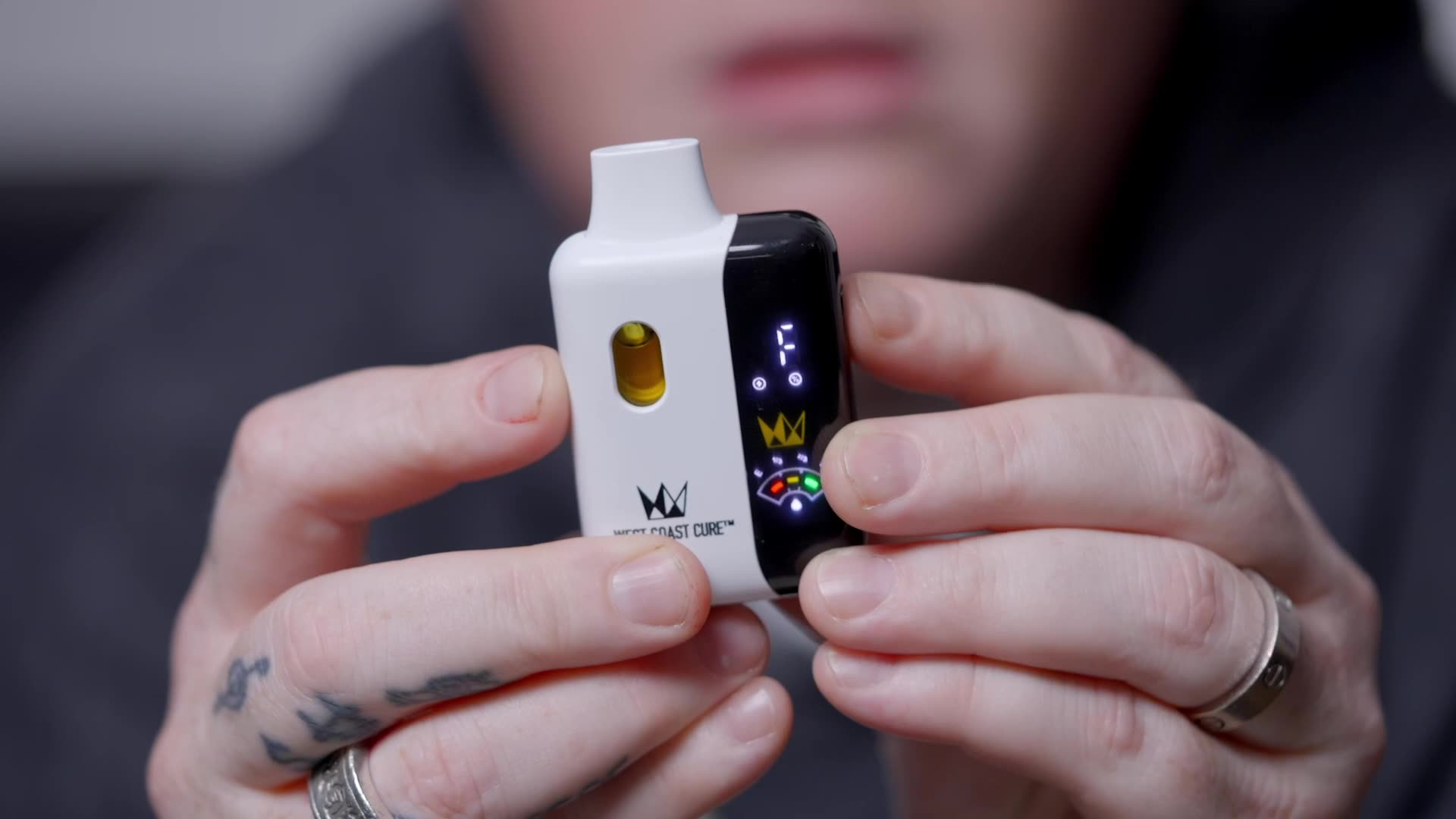
High voltage burns through terpenes fast. Lower voltage preserves flavor by keeping oil in the vaporization range instead of pushing it into degradation.
Higher voltage settings change what you’re actually inhaling.
Push a cart too hard and the oil starts breaking down. That’s when flavor drops out, hits turn harsh, and everything starts tasting the same.
Shop WCC Vapes Near YouHigh voltage burns terpenes before they can express
Terpenes are volatile. They don’t need much heat to vaporize, and they don’t tolerate excess.
Once voltage pushes the coil higher, temperatures can spike unpredictably. When that happens, terpenes don’t just fade, they degrade. What should come through as distinct flavor turns flat, then harsh.
That’s why a cart can taste clean at first and then suddenly fall apart mid-session.
The oil didn’t change. The heat did.
Low voltage keeps oil in the vaporization window
At lower settings (typically ~2.4V–2.8V), the coil heats more gradually. That gives the oil time to vaporize instead of flash-burning on contact.
The result shows up immediately:
- flavor stays intact
- vapor feels smoother
- hits stay consistent instead of spiking
Most experienced consumers treat low voltage as the starting point, especially when flavor is the priority. It’s easier to increase heat gradually than to recover terpenes that have already been burned off.
Why high voltage feels stronger (but isn’t better)
High voltage hits harder because it dumps heat into the coil faster.
That creates denser vapor and faster cannabinoid delivery, which can feel more intense. But that intensity comes with tradeoffs:
- terpene loss
- harsher vapor
- faster oil depletion
You’re getting more output, but less control. That’s why high-voltage sessions often start strong and end rough.
Most “burnt cart” problems are voltage problems
Burnt taste shows up when the coil overheats or runs dry. High voltage accelerates both:
- oil vaporizes faster than it can wick
- exposed coil starts scorching residue
- leftover oil degrades into off-flavors
What people call a “bad cart” is usually a setup issue.
Lower the voltage and the same cart often cleans up immediately.
Variable voltage gives you control over the experience
Variable voltage is what actually gives you control over your experience. One-temp batteries take that control away.
Not all concentrates behave the same:
- Distillate can handle higher heat
- Live resin and rosin are more heat-sensitive
Without voltage control, you’re stuck with whatever the battery decides, and it’s usually too hot.
With a variable voltage battery, you can:
- Stay low for better flavor
- Increase heat gradually if needed
- Adjust based on the oil you’re using
Best voltage settings by oil type
Different extracts respond differently to heat, which is why one voltage setting rarely works for every cart.
As a general starting point:
Rosin carts: ~2.0V–2.6V
Live resin carts: ~2.2V–2.8V
Distillate carts: ~2.8V–3.4V
These ranges aren’t strict rules. Hardware design, oil viscosity, and airflow all affect performance. The goal is to start low and increase voltage only when the cart needs more heat to produce consistent vapor.
If flavor begins dropping off, the vapor feels unusually harsh, or the cart starts tasting burnt, that’s usually a sign you’ve moved beyond the ideal range for that oil.
The bottom line
Voltage controls heat. Heat controls everything else.
Too high and you burn through terpenes, flatten flavor, and shorten the life of the cart. Lower settings keep the oil in range, preserve flavor, and maintain consistency from the first hit to the last.
If your cart isn’t hitting right, start with voltage.
Dial in your voltage for cleaner hits with West Coast Cure AIOs and 510 carts.
This post is provided for general informational purposes only. Any descriptions in this post about the perceived effects of cannabis strains, cannabinoids, or terpenes (including terms such as “sleepy,” “energized,” “relaxed,” or similar) reflect anecdotal consumer reports and subjective experiences. They are not based on clinical or medical research and should not be interpreted as scientific conclusions, guarantees, or typical results.
Individual responses to cannabis vary significantly based on many factors, including (without limitation) biology, tolerance, dose, method of consumption, product potency, product composition, set and setting, and interactions with medications or other substances. Your experience may differ from the experiences described in this post.
Cannabis products are not intended to diagnose, treat, cure, or prevent any disease.