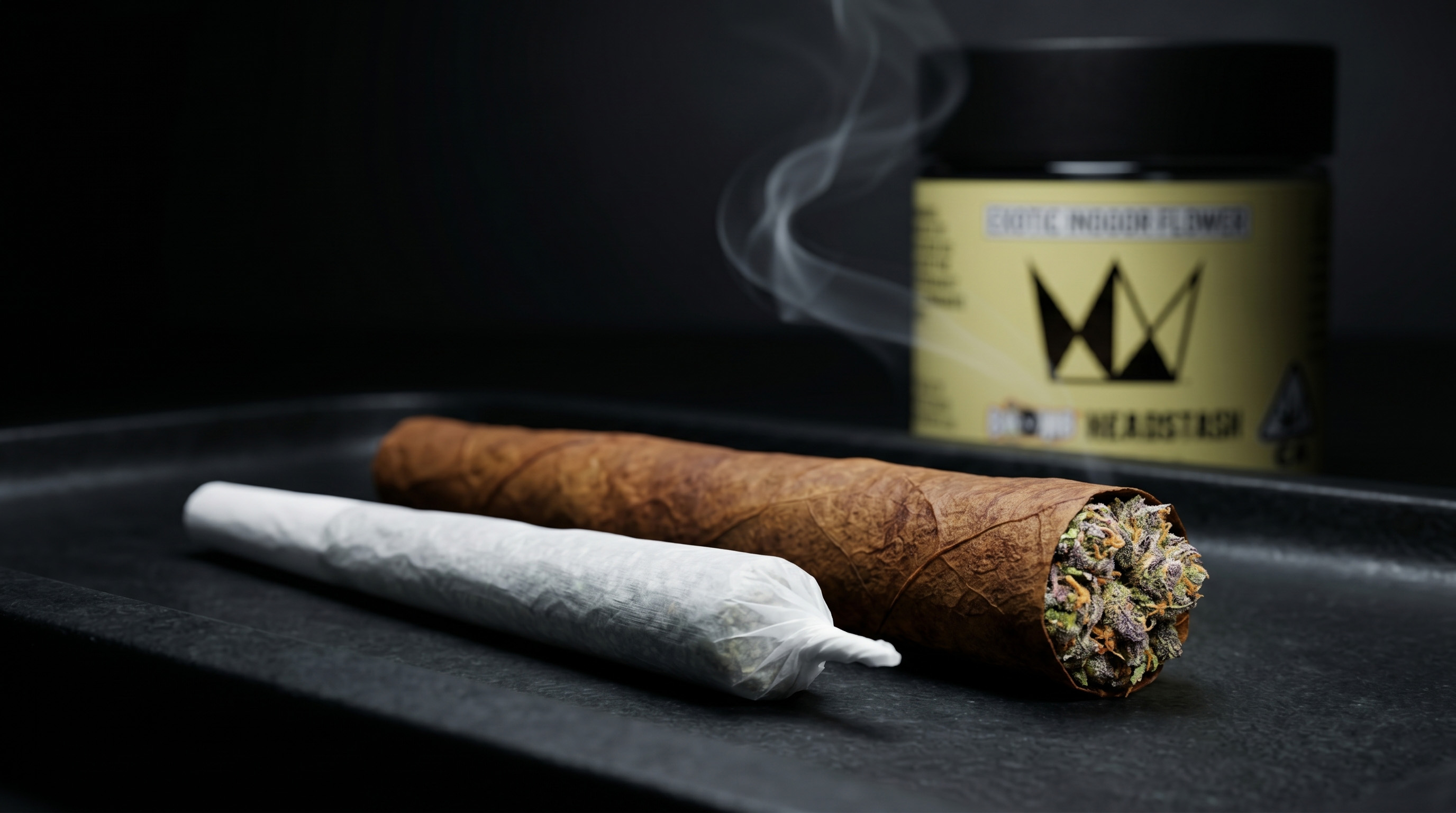
A joint and a blunt differ in one key way: the wrap. Joints use thin paper for a lighter burn and clearer flavor, while blunts use tobacco wraps that burn slower, hit heavier, and add their own taste to the smoke.
A joint uses thin rolling papers, which burn lighter and let the flower’s flavor come through more clearly. A blunt uses a tobacco wrap, which burns slower but adds heat, density, and its own flavor into the smoke.
In a joint vs blunt comparison, that choice affects everything, from terpene expression and burn rate to how smooth or heavy the session feels.
The Real Difference: Paper vs Tobacco
At the simplest level, joints and blunts do the same thing: they burn flower.
What changes is the material doing the burning around it.
A joint uses thin rolling paper. It burns quickly and mostly stays out of the way. A blunt uses a tobacco wrap. It burns slower, heavier, and adds its own presence to the smoke.
That one difference sets off everything else.
Flavor, burn speed, smoothness, it all starts there.
Flavor: Where the Difference Hits First
If you care about flavor, this is where the gap shows up immediately.
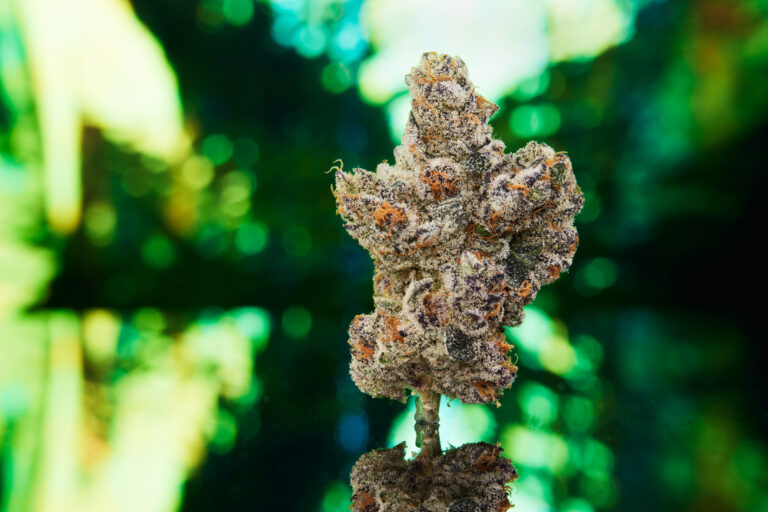
Joints tend to taste cleaner. The paper burns lightly, so what you’re getting is mostly the flower itself. That means the terp profile, citrus, gas, fruit, whatever’s in the jar, actually comes through.
Blunts are different. The tobacco wrap brings its own flavor from the first pull. That layer sits on top of the flower and can mute more subtle notes.
Some people like that. It adds weight and a certain richness. But if you’re trying to taste the strain for what it is, joints usually give you a clearer read.
You notice it most in the first few hits, that’s where the flavor is sharpest before heat starts building.
Burn Rate: Slower Doesn’t Mean Better
One of the biggest misconceptions in the joint vs blunt conversation is burn speed.
Blunts burn slower. That’s true. But slower doesn’t mean cleaner, it just means the wrap takes longer to burn.
Tobacco wraps burn hotter and hold heat longer, keeping the cherry hotter for longer stretches and potentially diminishing flavor over time.
Joints burn faster, but the paper is thin and doesn’t hold as much heat. The result is a lighter, more controlled burn.
So the tradeoff looks like this:
- Joint: faster, lighter burn, more flavor upfront
- Blunt: slower, heavier burn, more consistent over time
It comes down to what you want out of the session.
Smoke Texture: Light vs Heavy
Beyond flavor, the smoke itself feels different.
Joint smoke is usually lighter. The draw feels cleaner, and each hit doesn’t sit as heavy. That’s part of why terp-forward smokers lean toward joints, the experience stays focused on the flower.
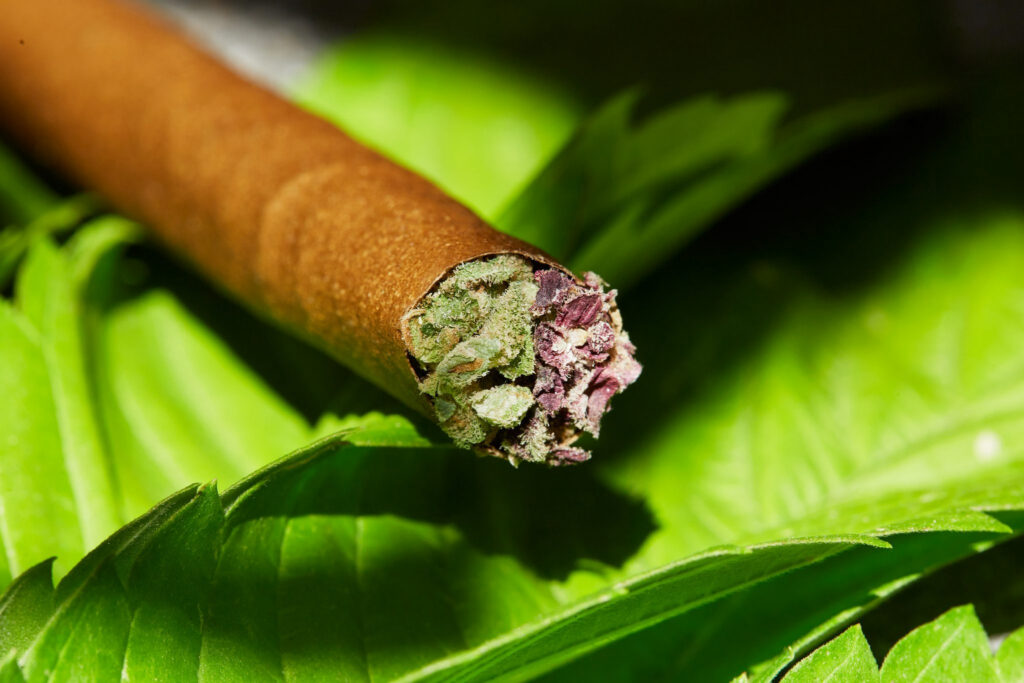
Blunts hit thicker. The smoke is denser, with more body to it. That comes from the tobacco wrap burning alongside the cannabis.
For some, that heavier feel is the point. It makes the session feel slower and more substantial.
For others, especially on longer sessions, it can feel harsh or overwhelming.
The Nicotine Factor
This part doesn’t get talked about enough.
Blunt wraps are made from tobacco. Even if you remove the filler, the wrap itself still contains nicotine. That becomes part of what you’re smoking.
Joints don’t have that.
If you’re trying to keep things clean and focused on cannabis alone, that difference matters. It changes not just the flavor, but the overall feel of the session.
Heat and Flavor Loss Over Time
Flavor always drops as you move through a joint or blunt. That’s just how combustion works.
But how fast it drops depends on the wrap.
Blunts tend to run hotter for longer, which can flatten out flavor as the session goes on. By the midpoint, a lot of the lighter terp notes are already gone.
Joints usually start brighter. You get a clearer expression of the strain early, and while flavor still fades, it doesn’t get masked in the same way.
That’s why people who are chasing terps pay attention to format, not just strain.
Experience: What the Session Feels Like
At the end of the day, this isn’t just about mechanics. It’s about how the session feels.
Joints are more direct. Cleaner taste, lighter smoke, quicker burn. They’re easy to control and better for actually tasting what you’re smoking.
Blunts are heavier and slower. They stretch out the session and add their own character to it. More presence, more density, more of a “full” smoke.
Neither is wrong. They just deliver different experiences.
When a Joint Makes More Sense

A joint usually makes more sense when:
- You care about flavor and terp profile
- You want a cleaner, lighter smoke
- You’re smoking solo or in a shorter session
- You want to taste the strain, not the wrap
This is where joints really stand out.
When a Blunt Makes More Sense
Blunts tend to make more sense when:
- You want a longer session
- You’re smoking with a group
- Flavor precision isn’t the priority
- You enjoy the tobacco-cannabis mix
There’s a reason blunts have stayed part of the culture. They deliver a different kind of experience.
The Bottom Line
The joint vs blunt choice comes down to what you want out of the smoke.
Joints keep things closer to the flower. Cleaner burn, clearer flavor, lighter feel. Blunts add weight. Slower burn, heavier smoke, and a layered flavor from the wrap.
Once you understand how paper and tobacco change the burn, the choice becomes intentional.
If you want to taste what your flower actually has to offer, start with a clean burn. If you want convenience, our pre–rolls are built to let the terp profile come through, no distractions, just the strain. If you’re looking for the full experience and want to roll for yourself, put some Bhomb Headstash flower in your joint or blunt to enjoy the best of the best.
This post is provided for general informational purposes only. Any descriptions in this post about the perceived effects of cannabis strains, cannabinoids, or terpenes (including terms such as “sleepy,” “energized,” “relaxed,” or similar) reflect anecdotal consumer reports and subjective experiences. They are not based on clinical or medical research and should not be interpreted as scientific conclusions, guarantees, or typical results.
Individual responses to cannabis vary significantly based on many factors, including (without limitation) biology, tolerance, dose, method of consumption, product potency, product composition, set and setting, and interactions with medications or other substances. Your experience may differ from the experiences described in this post.
Cannabis products are not intended to diagnose, treat, cure, or prevent any disease.